
Raising money isn’t the hard part. Raising well is. That’s where most founders fall short, not because the company lacks potential, but because the fundraising process is misunderstood. Too often, founders treat it as a performance, a single pitch to be perfected. In reality, fundraising is a structured process built on discipline, control, and momentum.
Here’s how to approach it properly.
Fundraising is sales, not speed dating. Three “interested” investors aren’t a pipeline; fifty is. Even the hottest startups benefit from volume, and those without hype absolutely depend on it.
Think in terms of a funnel: build a list, track the stages, and push prospects forward. Momentum comes from running a structured outreach process, waves of meetings, stacked touchpoints, and urgency created by design. Founders who run fundraising like a sales campaign close rounds. Founders who wait passively get stuck waiting indefinitely.

Most decks fall flat outside the room. Stripped of delivery and nuance, they’re just slides without energy. Investors may ask for a deck, but sending it cold rarely sparks momentum.
What works better is a tight teaser: a few sentences on what you’re building, meaningful traction, how much you’re raising, and why now. Two short paragraphs, max. The goal isn’t to impress an inbox → it’s to earn a live conversation.

The most important question you’ll hear: “Where are you in the raise?”
If your answer is vague, you lose control. The best founders run fundraising like a campaign with a timeline: first calls this week, second calls next week, target term sheet in 30–60 days. Dates can flex, but conviction must be clear.
Without urgency, there’s no lead. Without a lead, the round drags. Own the story and the schedule, or someone else will.

Yes, the myth of the cold email success story lives on. No, it’s not how rounds are actually raised. Most cold outreach dies in an assistant’s inbox.
Warm introductions are still the currency of fundraising. That means groundwork long before the raise begins: mapping intro paths, cultivating relationships, activating advisors. Founders who do this have leverage when it matters. Those who don’t are left scrambling.
Relationships compound. Start building them early.

Investor questions often come with hidden meaning:
Answering only the surface question makes you sound shallow. Answering the real question shows depth and inspires confidence.

Valuation dominates headlines, but terms shape outcomes. Control seats, option pool expansions, liquidation preferences, anti-dilution clauses – these can change the trajectory of your company long after the raise.
In the rush to close, founders often ignore structure. Don’t. Savvy founders negotiate both price and terms, knowing that what feels small today can decide everything tomorrow.

Fundraising isn’t something you juggle. It’s a sprint that requires complete focus. Trying to run product, hiring, and operations at the same time will drag the process out and wear everyone down.
The founders who succeed clear their calendars and make raising the only priority for several weeks. Concentrated effort closes rounds. Half-measures don’t.
👉 The founders who succeed clear their calendars and treat fundraising as the only priority for several weeks. It is a sprint, not a side project. A deliberate, concentrated effort closes rounds; a distracted one drags indefinitely.

Closing the round is not the finish line. It is the starting line for a long-term relationship. Capital provides fuel, but trust sustains momentum. That trust is built through consistent communication
Investors expect clarity, consistency, and visibility. A one-off celebratory email after the round is not enough. Regular, structured reporting turns investors into allies and prepares the ground for future raises.
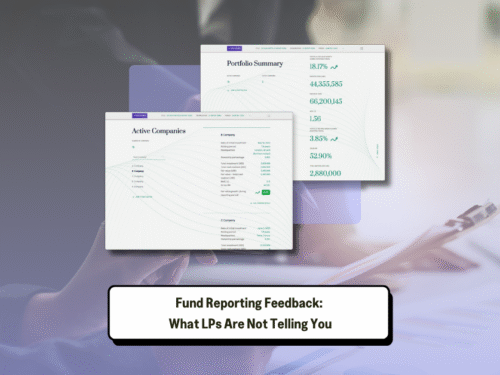
This is where many founders stumble. Updates become messy, scattered, or forgotten. That’s why tools like Rundit’s Investor Reporting platform exist. Designed specifically for startups and investors, it streamlines the process of creating professional, automated investor updates. Founders can move beyond messy spreadsheets and scattered updates to deliver reports that inspire confidence, demonstrate accountability, and strengthen relationships.

Because fundraising is not just about winning capital. It’s about keeping confidence strong long after the deal is signed.
👉 Founders who approach fundraising with discipline, control, and process don’t just raise money. They raise well. And with the right tools, they continue to raise better—every time.
Related articles
🔗 Raising Venture Capital: 10 Tips for Startup Founders (Rundit)
🔗 Fundraising for Startups: A Founder’s Comprehensive Guide (McCracken Alliance)
🔗 A Founder’s Guide to Navigating a Difficult Fundraise (DashingLeadership)

Simplify your reporting process with Rundit’s customised template. Free for startup team!