
Table of Contents
In-house LP reporting is the practice of managing all Limited Partner communications, performance updates, and fund reporting internally.
For years, most VC and PE firms outsourced this function by default. But that’s changing fast. The recent trend has witnessed an increasing number of firms bringing these critical communications back in-house. Funds that bring LP reporting in-house gain faster turnaround times, more control over how their story is told, and stronger LP relationships. Those are absolute advantages that compound over time, especially during fundraising.
This guide covers everything you need to know about making the transition: why the shift is happening, what modern LP reports must include, how to build the right internal workflow, and which tools make it scalable at any fund size.
Let’s dive into the Guide to In-House LP Reporting for VC Firms!
The LP reporting requirements have become increasingly sophisticated. Traditional fund administrators, while technically competent, often struggle to provide the speed and customization that modern LPs demand.
Similarly, effective LP reporting has become vital not just for compliance but for maintaining competitive positioning. Fund administrators typically juggle dozens or hundreds of clients simultaneously, creating bottlenecks that can delay critical communications with LPs by weeks or even months. This delay is particularly problematic during fundraising periods, quarterly reviews, or market volatility. It is when LPs require immediate insights to make informed decisions.
| An LP Report is a detailed document that outlines a fund’s performance and current status for its LPs, typically providing data on investment performance, portfolio updates, risks and opportunities, and expenses and fees. |
The standardized templates used by most fund administrators lack the nuanced storytelling that sophisticated LPs expect. Additionally, generic reports often miss the strategic context that helps LPs understand not just what happened, but why it matters and what it means for future performance.
In practice, what sets many high‑performing funds apart isn’t just their deal flow or brand. It’s actually how quickly they can communicate when something important happens. The pace of venture capital today leaves very little room for slow reporting cycles. When the team controls the LP reporting process internally, they can respond to portfolio updates or LP questions almost immediately. It’s the difference between sending an informed update the same afternoon versus waiting several weeks for an external provider to catch up.
This responsiveness becomes especially valuable when something unexpected happens, whether that’s a sudden market downturn, a major portfolio company milestone, or a potential follow‑on opportunity that requires LP alignment.
| LP reporting itself varies widely across the industry: some firms still follow quarterly rhythms, while others provide semi‑annual or annual updates depending on the LP agreement. What’s changing, however, is the expectation. The firms that stand out aren’t the ones hitting minimum reporting cycles. They’re the ones who can communicate in real time when something meaningful occurs. |
When it comes to reporting schedules, funds are shifting to a more fluid approach where insights can be shared the moment they’re relevant. To do that effectively, the reporting workflow has to be under the fund’s control. Outsourced structures simply can’t support that level of immediacy because they’re designed for batch processing, not real-time communication.
→ The result is a noticeable competitive advantage. LPs stay better informed, relationships strengthen, and GPs maintain momentum during moments when timing truly matters.
Effective LP reporting requires comprehensive coverage of fund performance metrics with a clear view of their investment status. Key components of effective LP reporting consist of:
The common challenge for many VC firms lies in consolidating data from multiple sources into a coherent narrative. Portfolio companies often use different accounting systems, reporting standards, and valuation methodologies, making data aggregation complex and time-consuming. Modern firms are investing in integrated systems that can pull data directly from portfolio companies, cap table management tools, and financial systems to create unified reporting platforms.
ESG (Environmental, Social, and Governance) metrics are now a core part of LP reporting, not a side note. Institutional investors increasingly ask for consistent, comparable sustainability data across the portfolio. That usually means a defined set of indicators, clear methodologies, and an auditable trail.
A practical approach is simple: agree a baseline ESG set (e.g., emissions, diversity, governance practices), set the collection cadence (quarterly or semi‑annual), and document sources and assumptions. Treat exceptions explicitly rather than burying them in notes. Firms that can reliably track and explain ESG metrics tend to move faster through diligence and often earn stronger trust with large LPs.

Numbers show what happened; LPs also need why it happened and what comes next. The most useful reports pair the core metrics with short, direct commentary that connects portfolio events to results and outlook.
Keep it disciplined:
In practice, the goal is simple: create a report that helps LPs connect the dots. When GPs provide thoughtful commentary alongside the quantitative results, LPs gain a clearer view of both the current portfolio position and the path ahead, something spreadsheets alone can’t deliver.
| Successful in-house reporting teams focus on telling the story behind the numbers, highlighting portfolio company milestones, market trends, and strategic decisions that may not be apparent from financial data alone. This might include discussions of hiring key executives, product launches, market expansion strategies, or competitive positioning changes that will impact future performance but may not yet be reflected in current metrics. |
In‑house LP reporting starts with a reliable data foundation. Most funds already use spreadsheets, deal‑tracking tools, and internal dashboards. The real challenge is unifying these sources without heavy manual work.
Build a single source of truth
The effectiveness of in‑house LP reporting relies heavily on having a solid and well‑structured technological foundation. Most VC firms already operate with a mix of internal dashboards, spreadsheets, deal‑tracking systems, and analytics tools. The challenge is not the lack of data, but the difficulty of bringing information together in a consistent, reliable format without excessive manual work. Efficient reporting workflows require systems that can pull from existing data sources, maintain accuracy, and support timely updates.
Use tools that fit existing workflows
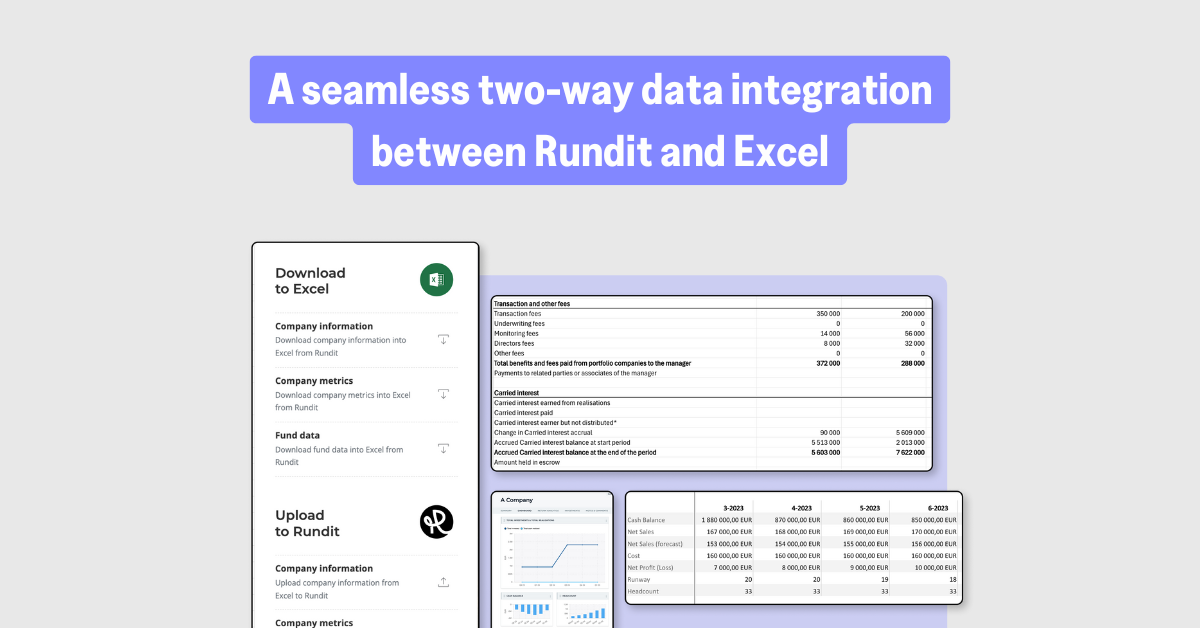
Cloud‑based platforms like Rundit that integrate directly with Excel, Google Sheets, and other commonly used tools have become particularly useful. They allow teams to maintain familiar processes while improving data consolidation, version control, and error reduction. When data flows smoothly from existing spreadsheets into a centralized reporting environment, it becomes significantly easier to prepare clear, accurate, and timely LP reports.
Transitioning LP reporting in‑house also requires thoughtful decisions around staffing and internal structure. Successful firms typically establish clear ownership of the reporting process so that information moves efficiently from investment teams and portfolio operations into finalized reports.
Assign clear roles
Set a repeatable cadence
Standardize and document
Plan for scale and continuity

Automation has become an essential part of managing LP reporting efficiently, but the goal isn’t to remove human judgment: it’s to remove the repetitive work that slows teams down. The most effective firms use automation to streamline data aggregation, calculations, and formatting, while keeping people involved where interpretation and nuance are required.
What to automate
A well‑designed reporting workflow should make it easy for LPs to find the information they care about, while still offering deeper detail for those who want to explore further. Make it easy to scan content and extract value, as people generally look to your content to answer a question, so provide that answer as clearly and obviously as possible.
| LP reports should be designed with similar principles, making key information immediately accessible while providing deeper detail for LPs who want additional context. |
Modern reporting platforms can automate many aspects of the reporting process, from data aggregation and calculations to formatting and design. However, the most effective implementations maintain human oversight for strategic commentary, portfolio insights, and quality assurance. This balanced approach allows firms to achieve the speed and consistency benefits of automation while preserving the personalized insights that LPs value most.
What to keep human
Version control and approval workflows become particularly important when multiple team members contribute to LP reports. Digital platforms that support collaborative editing, approval chains, and audit trails help ensure that reports meet both internal quality standards and external compliance requirements. These systems also make it easier to maintain consistency across multiple fund reports and track changes over time.
Governance you shouldn’t skip
Where Rundit helps (practically)

Automation supports the process; it doesn’t replace it. Effectively implemented automation enables firms to deliver timely, reliable reporting at scale, while keeping the parts that matter most in human hands.
Professional presentation has become increasingly important as LPs receive reports from dozens of fund managers and need to quickly assess and compare performance across their portfolios. Design should reduce friction and make the right insights obvious.
| Effective LP reports use consistent design standards, clear data visualization, and logical information hierarchy to facilitate quick comprehension and detailed analysis. |
Make information scannable
Visual standards that aid decisions
This is where reporting tools like Rundit can step in and enhance the process. The platform allows firms to produce professional, fully branded reports that follow established industry guidelines such as Invest Europe and ILPA, while still maintaining each fund’s unique identity. Reports can be shared as interactive online dashboards, making it easier for LPs to explore data without downloading files or navigating logins. For LPs who prefer traditional formats, reports can be exported to PDF or Excel, ensuring compatibility with internal review processes. And because Rundit pulls from live data, reports stay consistent, up to date, and aligned with the latest portfolio and fund‑level information, without manual reformatting.
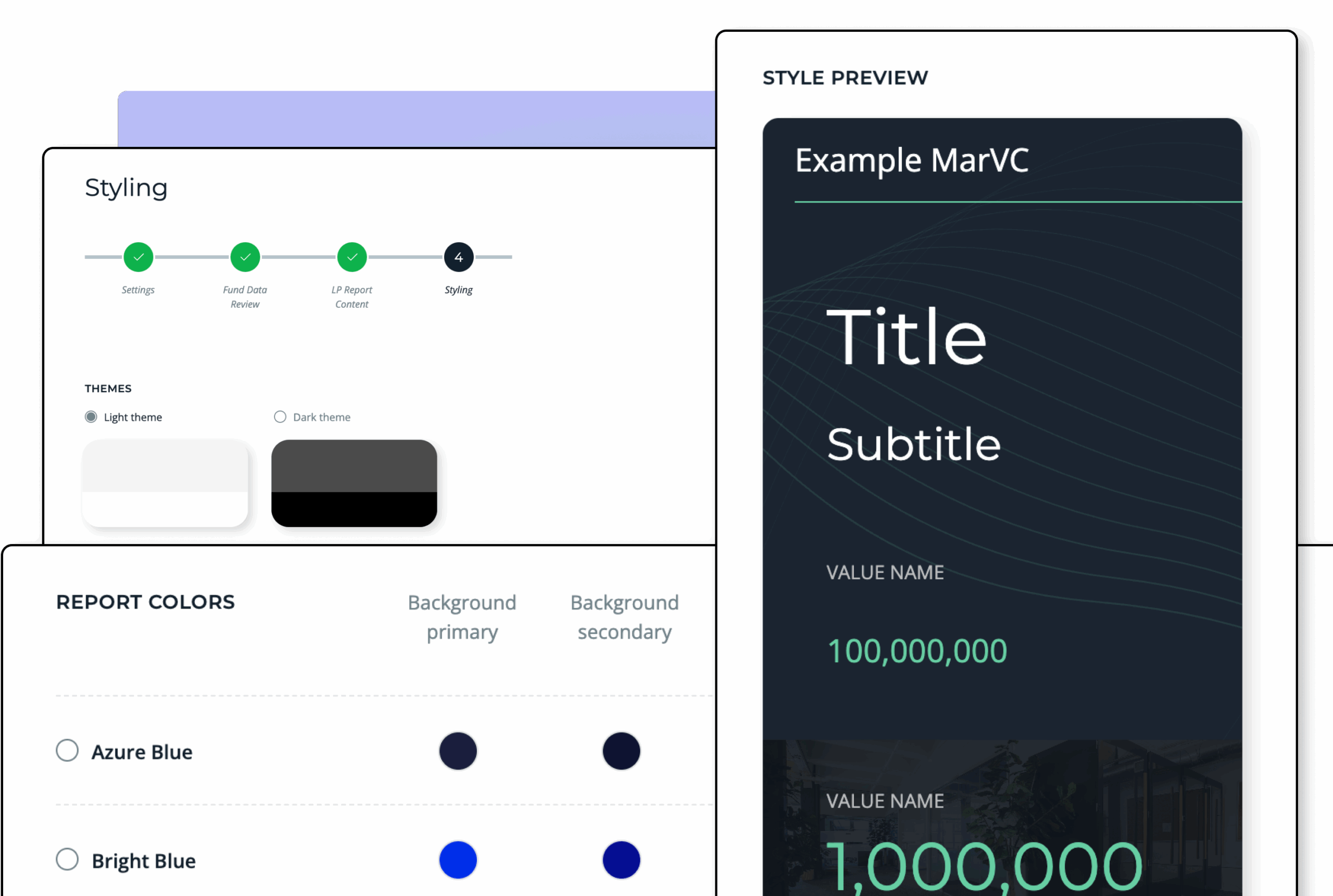
Ultimately, design and presentation standards aren’t about aesthetics: they’re about creating clarity, reducing the risk of misinterpretation, and helping LPs focus on what matters most. With the right tools and thoughtful structure, reporting becomes not just a compliance exercise, but a more transparent and efficient way to communicate the story of the fund.
Related article: Limited Partners Reporting: Tips and Best Practices for Effective Communication
| LP Reports are a crucial tool for maintaining transparency and ensuring LPs stay informed about their investments, and these reports must be thorough, consistent, and accurate. Establishing standardized data collection processes and validation procedures becomes essential for maintaining LP confidence and regulatory compliance. |
One of the biggest hurdles in in‑house LP reporting is data quality. Portfolio companies run on different fiscal calendars, use different accounting policies, and sit at very different levels of reporting maturity. The result is inconsistent inputs that need normalization before they can roll up into a reliable fund‑level view.
What good looks like
Practical fixes
To keep the reporting process reliable, firms need a disciplined approach to collecting and validating data. This often starts with setting clear expectations for portfolio companies: standardized templates, defined reporting timelines, and consistent methodologies for values such as revenue recognition, cash runway, or valuation adjustments. However, templates alone aren’t enough. As companies grow and change, their reporting needs evolve, so these standards require ongoing review and refinement.
Where tooling helps
Many firms ultimately invest in a small portfolio of operations or a finance function that focuses on this work. Having dedicated people responsible for data collection and validation pays off quickly: errors are caught earlier, updates run more smoothly, and the overall reporting process becomes far more predictable. Alternatively, investment teams can also explore tools like Rundit to automatically import portfolio updates from email into visualized dashboard.
Don’t skip the audits
Regular audits and reconciliations are equally important. Automated checks can catch obvious issues, but manual review still plays a critical role, especially in spotting inconsistencies that only emerge when looking across multiple companies or comparing periods side by side. Documenting data sources, methodologies, and any adjustments also helps create transparency; something LPs increasingly expect when they ask follow‑up questions or dive deeper into specific numbers.
Scaling in‑house reporting is less about headcount and more about a repeatable process. Aim for a workflow where new companies, new funds, and peak cycles can be absorbed without stress.
Balance automation with oversight
Tackle ESG data early
Build for resilience
Tooling that supports scale
Bringing reporting in‑house also means planning for operational resilience. External administrators typically have backup systems and team redundancy built into their processes. When the work moves internally, firms need their own safeguards in place, whether that’s cross‑training staff, documenting critical steps, or preparing for scenarios like system downtime or team turnover. Even minor disruptions can affect reporting deadlines, so building in contingency plans early helps avoid surprises later.
The evolution of LP reporting continues to accelerate as new technologies and LP expectations reshape industry standards. Funds are no longer judged only on returns — they’re evaluated on transparency, clarity, and their ability to communicate meaningfully with LPs. As a result, more firms are rethinking how they structure reporting processes and the tools they rely on.
Artificial intelligence and machine learning are beginning to influence reporting workflows by making it easier to analyze portfolio data, identify meaningful trends, and surface insights that would otherwise take hours of manual work. While these technologies are still early in their adoption across venture capital, their trajectory is clear: they will increasingly support data preparation and analysis, freeing teams to focus on interpretation and narrative, where human insight matters most.
Real‑time reporting is also becoming more realistic as both funds and portfolio companies adopt cloud‑based systems. Instead of waiting for quarterly cycles, firms are exploring ways to provide more frequent updates — not to overwhelm LPs, but to be responsive when something meaningful occurs. This shift places pressure on internal processes, which must be stable and well‑structured if more fluid communication is going to work.

Across private markets, the push for greater transparency is accelerating. Industry bodies such as ILPA and Invest Europe continue to refine their guidance, and even when new regulations are contested or delayed, the direction is unmistakable: more structure, clearer disclosures, and better comparability across funds.
As LPs become more sophisticated, especially institutional investors with their own reporting obligations, they expect GPs to maintain consistent methodologies and deliver information in a format that is easy to audit and understand. This applies not only to financial performance but also to areas like fees, risk, and ESG.
Tools like Rundit help funds stay aligned with these expectations by offering reporting templates that follow recognized industry frameworks and by keeping underlying data consistent across reporting cycles. When LPs ask follow‑up questions — and they always do — having a system that tracks inputs, methodologies, and historical changes makes the response significantly faster and more precise.

| Frequently Asked Questions |
| What is LP reporting in venture capital? | LP reporting is the process by which a fund’s General Partners communicate performance, portfolio updates, and financial data to their Limited Partners. Reports typically include metrics such as NAV, IRR, capital call and distribution summaries, and strategic portfolio commentary. |
| How often should LPs receive reports? | LP reporting is the process by which a fund’s General Partners communicate performance, portfolio updates, and financial data to their Limited Partners. Reports typically include metrics such as NAV, IRR, capital call, and distribution summaries, and strategic portfolio commentary. |
| What is the difference between in-house and outsourced LP reporting? | In-house LP reporting means the fund manages the entire reporting process internally, from data collection to final distribution. Outsourced reporting delegates this to a third-party fund administrator. In-house gives more control, speed, and personalisation; outsourced reduces internal resource requirements but often creates delays and limits customisation. |
| What reporting standards should LP reports follow? | The most widely used frameworks are ILPA (Institutional Limited Partners Association) and Invest Europe guidelines. These define standard metrics, templates, and disclosure requirements that help LPs compare performance across funds. |
The shift to in‑house LP reporting is reshaping how venture firms manage investor communication and competitive positioning. LPs expect transparent, timely, and contextual updates, expectations that are hard to meet with slow, templated, outsourced models.
Building an internal reporting capability requires attention to technology, workflow design, team structure, and data quality. Firms that make the investment gain a lasting advantage and can respond quickly when portfolio developments occur, deliver clearer analysis, and build deeper trust with their LPs.
As the industry continues to mature, LP reporting will no longer be seen as a compliance task or a quarterly burden. It will be recognized as a core competency: one that influences fundraising outcomes, strengthens investor relationships, and differentiates high‑performing firms from the rest. GPs who invest in scalable, well‑structured reporting processes today will be far better positioned to meet tomorrow’s standards, with greater control, more insight, and a reporting experience that truly reflects the quality of their work.
| Rundit – Portfolio Management and LP Reporting Tool |
| By centralizing portfolio data, standardizing metrics, and enabling fully customizable LP reports, Rundit gives firms the operational backbone needed to support modern reporting expectations. Reports can be shared as interactive dashboards or exported into PDF or Excel, and because the data flows directly from the portfolio management environment, updates are smooth and consistently accurate. → Book an intro call and get to know Rundit! |
Additional Resources