Table of Contents
This month on Rundit’s blog, we’re covering three regulatory developments that landed in April: the SFDR 2.0 legislative process moving forward, AIFMD2 taking effect across the EEA, and the SEC proposing to roll back Form PF requirements in the US. We also share what these changes mean for your reporting infrastructure and how Rundit helps fund teams stay ahead of rising LP and regulatory expectations.
Here’s what fund managers need to know.
The European Commission is abolishing the familiar Article 8 and 9 labels and replacing them with a new formal product categorisation framework, each category carrying binding 70% minimum investment thresholds and defined eligibility criteria. There is no grandfathering clause, meaning every existing fund must be reassessed against the new criteria.
Trilogue negotiations between the European Parliament and Council are underway this month, with full application expected from 2028. That timeline may feel distant, but the operational work starts now. Demonstrating ongoing category compliance requires systematic, auditable ESG data at both company and fund level, something most funds are not yet set up to produce consistently.
Under SFDR 2.0, the existing Article 6, 8, and 9 classification system will be replaced by four formal product categories:
| Article | Category | Threshold | Description |
|---|---|---|---|
| New Article 9 | Sustainable | 70% minimum | Assets invested toward a defined sustainability objective. |
| New Article 8 | Transition | 70% minimum | Assets in companies on a credible path toward sustainability. |
| New Article 7 | ESG basics | 70% minimum | Assets integrating ESG considerations beyond risk management. |
| New Article 6 | Uncategorised | None | Baseline risk disclosure only. No sustainability-related marketing permitted. |
→ Read the full SFDR 2.0 breakdown.
On April 16, 2026, the revised Alternative Investment Fund Managers Directive (AIFMD2) came into force across all EEA member states.
The most significant near-term changes:
Governance and operational compliance are immediate. All alternative investment fund managers operating in the EEA must demonstrate compliance with the new governance and reporting requirements from April 16, regardless of when their funds were established.
Expanded Annex IV reporting is coming in 2027. The new template, which is required from April 16, 2027, adds granular ESG performance data at the portfolio company level, fee structures broken down by investor class, and detailed performance attribution across investment strategies. The one-year lag gives limited relief: the data infrastructure to support it needs to be in place now.
Third-country managers face tighter access. US and non-EEA managers raising capital from European LPs face stricter conditions under AIFMD2. The cost and complexity of European capital access is rising, prompting many managers to reassess whether it remains worthwhile.
For funds in the €500 million to €5 billion range, which represents the core of the European private equity and credit markets, AIFMD2 represents the most disruptive set of adjustments.

On the same week AIFMD2 took effect in Europe, the SEC and CFTC jointly proposed going in the opposite direction in the US.
On April 20, the two regulators proposed amendments to Form PF that would eliminate filing obligations for many private fund advisers entirely, and significantly reduce burdens for those who remain in scope.
Key proposals include:
The three developments covered above are not moving in the same direction. European fund managers face a more demanding reporting environment in 2026, not a lighter one. SFDR 2.0 and AIFMD2 are raising the bar for data quality, auditability, and ESG substantiation simultaneously, while the regulatory relief the US is proposing through Form PF does not extend to the EU.
The funds best positioned for this environment share one thing in common: they have already moved away from manual, spreadsheet-based reporting processes. Clean, consistent, validated data from portfolio companies, collected systematically rather than chased each quarter, is what makes compliance manageable and LP reporting credible. Funds still relying on fragmented email rounds and ad hoc spreadsheets will feel the operational pressure most acutely as AIFMD2’s expanded Annex IV reporting comes due in 2027 and SFDR 2.0 reclassification work picks up through 2028.
Building that data infrastructure now is not a nice-to-have. It is the prerequisite for everything else.
| Rundit platform centralises ESG and financial data collection directly from portfolio companies into a single validated source. Fund teams can monitor PAI thresholds, track SFDR category compliance, and compile the structured outputs that evolving regulatory requirements demand, without rebuilding the picture from scratch every quarter. → Book a Rundit demo. |
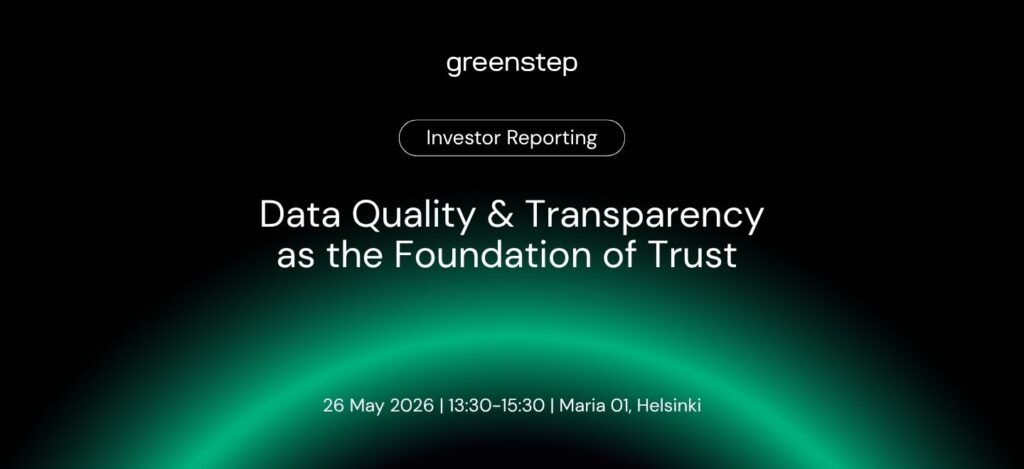
We’re hosting an event with Greenstep on 26 May in Helsinki, where a panel of fund managers, investors, and back-office experts will discuss what these regulatory changes mean in practice: SFDR 2.0 reclassification, evolving LP expectations, and how leading funds are building reporting infrastructure that holds up to scrutiny.
Investor Reporting: Data Quality & Transparency as the Foundation of Trust
📅 Tuesday, 26 May 2026 | 13:30
📍 Maria 01, Lapinlahdenkatu 16, Helsinki
→ Learn more & reserve your seat
→ Directive (EU) 2024/927 – EUR-Lex Official Journal
→ ESMA Reporting Technical Standards
→ Directive (EU) 2024/927 – EUR-Lex
→ SEC Press Release
→ Federal Register
→ Full Proposing Release – SEC.gov PDF
→ CFTC Press Release